


Stop fighting the meltdown.
MEET it.

Their alarm system just took over, and the part of the brain that processes logic has gone temporarily offline. They need something different from you.

A four-step framework grounded in developmental science to help your child settle when big feelings take over.

4.5 on Amazon

“It just helps you feel a little steadier in the hard moments.”

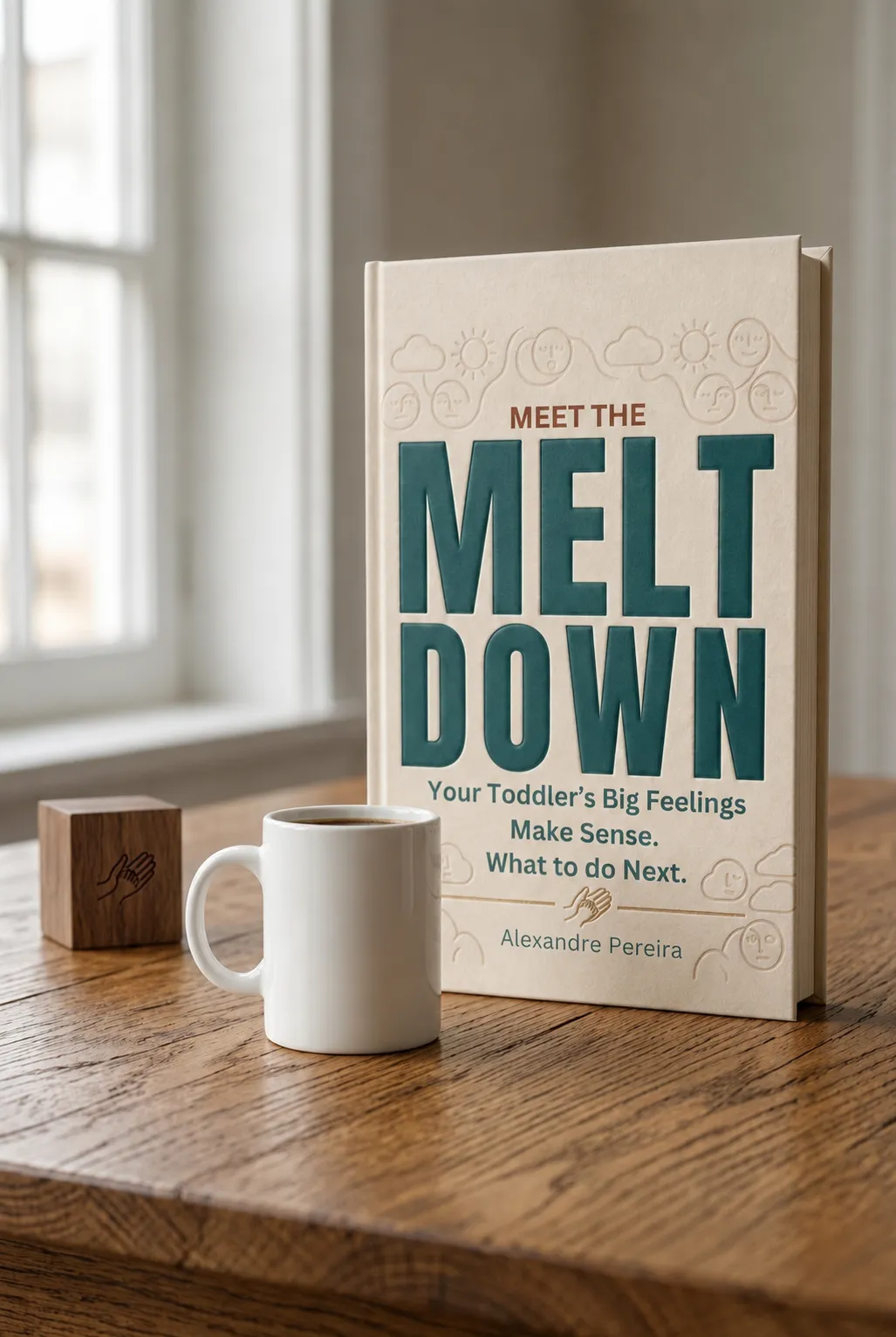
Meet the Meltdown, the book, standing on a wooden table beside a mug of coffee.

The book

Replace dread with confidence.

Your toddler's big feelings make sense.

Meet the Meltdown introduces the MEET framework and over 50 specific scripts to use when the alarm state takes over. It gives you a practical response so you can stop guessing and start helping their body settle.

Buy on Amazon
Meet the Meltdown resting on a side table with a mug and a plant.

Get the free Meltdown Script Library

Instant, word-for-word scripts for ages 2-6.

Download

The method

Four ideas that change the hard moments.

A parent breathing calmly beside an overwhelmed toddler.

The Alarm State

When big emotions surge, the alarm system takes over. Your child cannot process logic or hear explanations. It is biology, not defiance.

Read

When a toddler melts down, their amygdala detects a threat. Logic and reasoning land as background noise. They literally cannot learn until the body feels safe.

Instead of arguing, try:

"I see you are having a hard time. I am here."

This is the foundation of the MEET framework, found in Chapter 2 of the book.

Get Meet the Meltdown on Amazon


A parent kneeling to a toddler's eye level.

The MEET Framework

Settle first, teach later. Learn the four-step method to lend them your calm until they build enough of their own.

Read

Why logic fails during a meltdown.

Dealing with a tantrum is about lending them your regulated nervous system. Your presence helps their body settle.

  • Match the moment. Pause and adjust your energy.
  • Eye-level. Get low to enter their world.
  • Express what you see. Name the experience simply.
  • Time together. Stay close until the intensity drops.

Master the full MEET framework in Chapter 2 of the book.

Get Meet the Meltdown on Amazon

A parent holding a child close on a couch after a hard moment.

The Power of Repair

You will lose your patience. What matters is what happens next. Learn how to reconnect after you snap.

Read

Repair matters more than perfection.

Your nervous system works exactly like your toddler's. When it floods, you lose access to patience. You will snap.

The goal is not to never yell again. The goal is what happens next. When you pause, own your behavior, and reconnect, you teach your child that relationships survive mistakes.

Avoid justifying your reaction or asking your child to manage your guilt.

Learn exactly how to rebuild connection after a rupture in Chapter 3 of the book.

Get the book on Amazon
A toddler pouring water at a low, accessible table.

A Space with Fewer "No"s

Reduce power struggles by changing the environment. Small shifts build independence and lower daily friction.

Read

Change the environment to narrow the gap.

Most toddler friction is frustration. Your child wants to do something, cannot reach it, and their system floods.

By moving cups to a low shelf or providing step stools, you remove potential friction points before they happen. This is not about making your child compliant. It is about letting them operate in a space built for their capabilities.

Get the room-by-room prevention checklist in Chapter 5 of Meet the Meltdown.

Get the book on Amazon

Free tool

Here's your Meltdown Script Assistant

Describe what's happening with your child. Get a specific script based on the MEET framework from Meet the Meltdown.

Try something like:

"My 3-year-old hits when he's excited. What do I say?"

"Bedtime is a fight every night. Help."

Enter your email on the page below and you'll get instant access.

Chat with the Assistant
Alexandre Pereira, author of Meet the Meltdown.

The author

Hi, I'm Alexandre.

I am a father and a technology leader.

I developed the MEET framework through my own parenting and engagement with child development research.

I needed tools that were simple enough to use when my hands were shaking.

This is not theory from an ivory tower. It is a field-tested method for real parents.